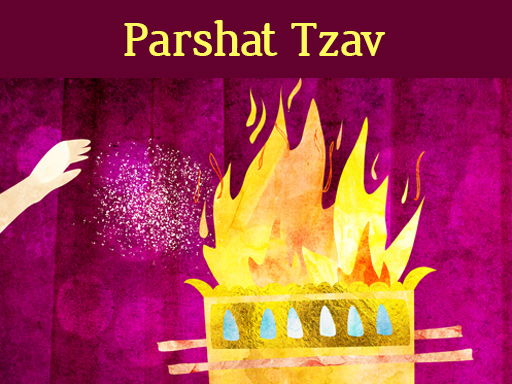
🔥 Parashat Tzav: A Journey Into Holiness, Sacrifice, and the Fire That Never Sleeps
Parashat Tzav (Leviticus 6–8) invites us into the inner life of Israel’s worship — not the dramatic narratives of Genesis or Exodus, but the quiet, disciplined, reverent world of priests, offerings, and sacred fire. If Vayikra introduces the offerings, Tzav reveals the heart behind them. It is a portion about constancy, holiness, and the weight of drawing near to God.
Though the ancient rituals may seem distant, their spiritual architecture remains profoundly relevant. In fact, Tzav becomes a mirror: it reflects the condition of our inner altar, the shape of our devotion, and the seriousness with which we approach the presence of God.
🔥 The Perpetual Fire: A Symbol of Unceasing Devotion
“A perpetual fire shall be kept burning on the altar; it shall not go out.” (Leviticus 6:6)
This command is repeated three times — a rarity in Torah. The altar fire was not a one‑time miracle but a daily responsibility. The priests added wood every morning, cleared ashes, and ensured the flame never dimmed.
This perpetual fire becomes a spiritual metaphor:
- Grace is God’s gift; devotion is our stewardship.
- The Spirit ignites; we tend.
- Holiness begins with God but continues with our response.
The fire on the altar is the fire of the heart — the flame of faith, gratitude, repentance, and love. It is not self‑sustaining. It must be fed.
In a world of distraction, Tzav calls us back to the slow, steady work of tending the flame.
🩸 The Burnt Offering: Total Surrender
The olah (burnt offering) is consumed entirely. Nothing is held back. It ascends wholly to God.
This is the offering Paul echoes when he urges believers to present their bodies as “living sacrifices” — not partially, not occasionally, but wholly.
The burnt offering teaches:
- God desires wholeness, not fragments
- Worship is not an event but a consuming orientation
- Holiness is not partial; it is total consecration
In Messiah Yeshua, we see the perfect olah: a life wholly given, wholly obedient, wholly pleasing to the Father.
🍞 The Grain Offering: Holiness in the Ordinary
The grain offering (minchah) is simple — flour, oil, frankincense. No blood. No drama. Just the work of human hands offered to God.
Tzav elevates the ordinary:
- Daily labor becomes worship
- Simple gifts become sacred
- The mundane becomes a meeting place with God
This offering reminds us that holiness is not only found in the extraordinary moments but in the quiet, repetitive, faithful acts of daily life.
🫓 The Priestly Portion: Participation in Holiness
One of the most intimate elements of Tzav is the priestly consumption of certain offerings. Eating is covenantal. It is relational. It is a sign of shared life.
The priests do not merely perform rituals — they partake.
This anticipates the table of Messiah, where we do not merely observe His sacrifice but participate in His covenant life. Holiness is not a spectator event; it is a shared meal.
🧼 Purity and Boundaries: The Weight of Holiness
Tzav is meticulous about purity:
- who may eat
- what may be touched
- what must be burned
- what must be washed
- what must be kept separate
These boundaries are not arbitrary. They teach the gravity of approaching a holy God.
Holiness is not casual.
Grace is not cheap.
Atonement is not light.
Every detail whispers the same truth:
God is holy, and drawing near requires reverence.
🕊️ Messiah in Tzav: The Fulfillment of Every Offering
Every offering in Tzav finds its fullness in Yeshua:
| Offering | Meaning in Torah | Fulfillment in Messiah |
|---|---|---|
| Burnt Offering (olah) | Total surrender | His perfect obedience |
| Grain Offering (minchah) | Sinless devotion | His pure, unblemished life |
| Peace Offering (shelamim) | Fellowship with God | His reconciling death |
| Sin Offering (chatat) | Atonement for sin | His substitutionary sacrifice |
| Guilt Offering (asham) | Restitution and repair | His restoration of what was broken |
Tzav is not an obsolete ritual manual. It is a shadow of the Cross, where every symbol becomes substance.
❤️ A Devotional Reflection: Tending the Inner Altar
Tzav invites us to examine our own altar:
- Is the fire still burning?
- Am I offering God my whole life or only the parts I’m comfortable with?
- Do I treat His presence casually or reverently?
- Do I see my daily work as sacred?
- Am I participating in Messiah’s life or merely observing it?
Holiness is not perfection; it is direction — a life oriented toward God, sustained by grace, and purified by His presence.
✨ Conclusion: The Call of Tzav Today
In a culture that prizes spontaneity, Tzav teaches constancy.
In a world that celebrates self-expression, Tzav teaches surrender.
In a time that trivializes the sacred, Tzav teaches reverence.
The ancient fire still speaks.
The altar still calls.
The God who met Israel in the tabernacle still invites us to draw near — not casually, but wholeheartedly; not occasionally, but continually; not partially, but with the whole burnt offering of our lives.
🔥 Parashat Tzav — A 7‑Day Devotional Companion
A week of drawing near, tending the flame, and walking in the holiness of Messiah.
Day 1 — The Fire That Never Goes Out
Scripture
Leviticus 6:6 — “A perpetual fire shall be kept burning on the altar; it shall not go out.”
Reflection
The altar fire was not a momentary blaze but a continual flame. God lit it, but the priests tended it. This is the rhythm of grace: God initiates, we respond. The Spirit ignites, we steward.
Your heart is an altar. The flame may flicker, but it must not be neglected.
Prayer
“Lord, rekindle what has grown dim. Teach me to tend the flame of devotion with faithfulness and joy.”
Practice
Spend 10 quiet minutes today simply being present before God — no agenda, no requests, just tending the flame.
Day 2 — The Burnt Offering: A Life Fully Given
Scripture
Leviticus 6:9 — “The burnt offering shall remain on the hearth… all night until morning.”
Reflection
The burnt offering was consumed entirely. Nothing was held back. This is the picture Paul draws on when he calls us to be “living sacrifices.”
Holiness is not perfection — it is surrender.
Prayer
“Jesus, You gave Yourself wholly for me. Teach me to give myself wholly to You.”
Practice
Identify one area of your life where you’ve been offering God only part of yourself. Write it down and surrender it intentionally.
Day 3 — The Grain Offering: Holiness in the Ordinary
Scripture
Leviticus 6:14–15
Reflection
The grain offering is simple — flour, oil, frankincense. No blood. No spectacle. Just daily work offered to God.
Holiness is not only found in the dramatic. It is found in the ordinary faithfulness of everyday life.
Prayer
“Sanctify my routines, Lord. Make my ordinary moments holy.”
Practice
Choose one mundane task today — washing dishes, answering emails, folding laundry — and consciously offer it to God as worship.
Day 4 — Eating in the Presence of God
Scripture
Leviticus 7:6 — “Every male among the priests may eat of it; it shall be eaten in a holy place.”
Reflection
The priests didn’t just perform rituals — they participated in them. Eating is covenantal. It is intimate. It is shared life.
In Messiah, we are invited to the table — not as spectators but as participants in His covenant.
Prayer
“Jesus, thank You for inviting me to Your table. Let me live as one who shares in Your life.”
Practice
Share a meal with someone today — even a simple one — and treat it as holy fellowship.
Day 5 — The Weight of Holiness
Scripture
Leviticus 7:19–21
Reflection
Tzav is meticulous about purity. Not because God is harsh, but because His presence is weighty. Reverence is not fear; it is love expressed through honor.
Holiness is not casual. Grace is not cheap.
Prayer
“Father, teach me to approach You with reverence, not distance; with awe, not anxiety.”
Practice
Before bed, take two minutes to examine your heart. Where have you treated God casually? Offer it to Him.
Day 6 — Messiah in Every Offering
Scripture
Isaiah 53:10 — “He made His soul an offering for guilt.”
Reflection
Every offering in Tzav finds its fulfillment in Yeshua:
- Burnt offering → His total obedience
- Grain offering → His sinless life
- Peace offering → His reconciling death
- Sin offering → His atoning sacrifice
- Guilt offering → His restoration of what was broken
The shadows become substance in Him.
Prayer
“Jesus, thank You for being the fulfillment of every offering. Let my life reflect Your sacrifice.”
Practice
Read one Gospel passage today and look for how Jesus embodies the offerings.
Day 7 — Tending the Inner Altar
Scripture
Psalm 51:17 — “A broken and contrite heart… You will not despise.”
Reflection
The altar of your heart is where the real offering happens. Not in perfection, but in humility. Not in performance, but in presence.
The fire still burns. The invitation still stands. Draw near.
Prayer
“Lord, here is my heart — imperfect, but Yours. Keep the fire burning.”
Practice
Write a short prayer of dedication for the week ahead. Offer it as your “burnt offering” of devotion.
 Sola Scriptura, Sola Fide, Sola Gratia, Solus Christus, Soli Deo Gloria
Leave a comment